Tappetino d'anima in fibra di vetro
Tessuti multiassiali in fibra di vetro
Tappetino cucito in fibra di vetro
Tappetino combinato cucito Surface Veil
Tappetino combinato in fibra di vetro intrecciato
Stoppino intrecciato in fibra di vetro
Tappetino a filo tagliato in fibra di vetro

Cavi compositi Weitong con tecnologia all'avanguardia Woven Roving
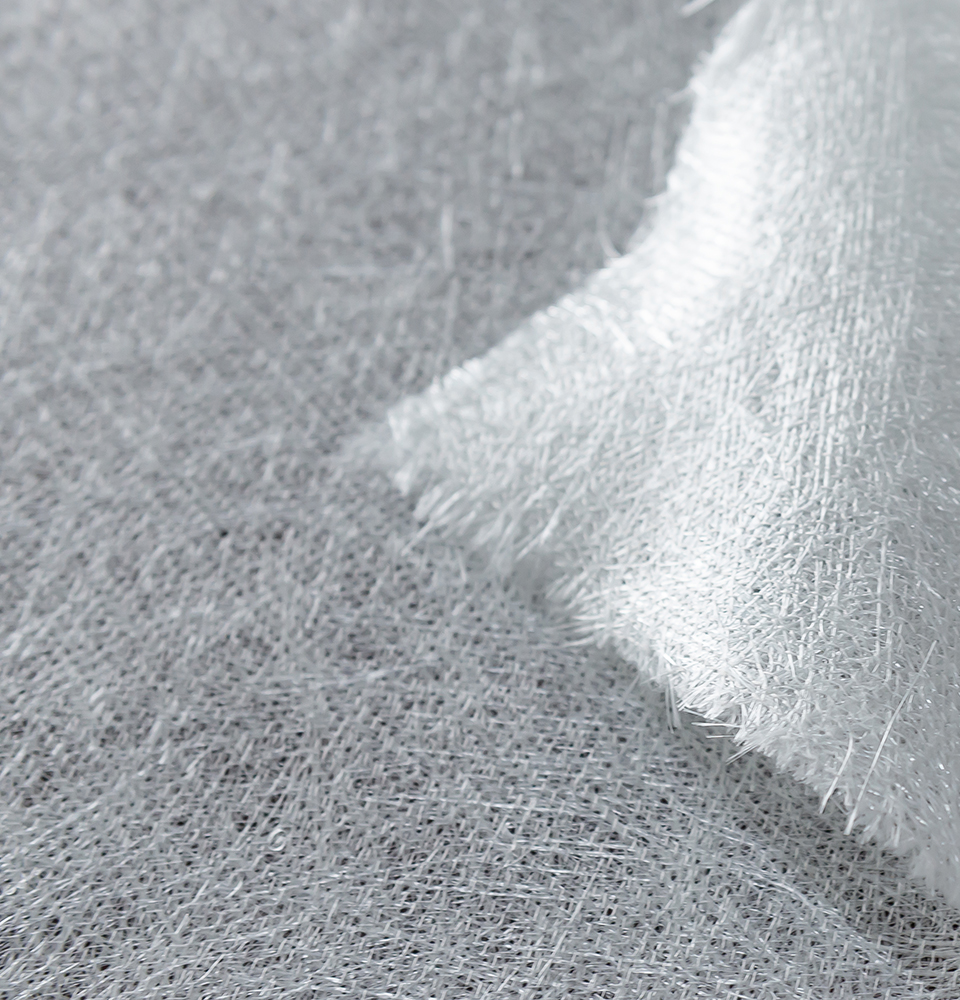
Fiberglass stitched mat is a type of glass fiber reinforcement used in composite materials. It is mainly made from glass fibers that are laid according to the required structure and then secured with stitching yarns to form a stable sheet.
Unlike conventional fiberglass chopped strand mat, stitched mat does not primarily rely on binders to hold the fibers together. Instead, mechanical stitching keeps the fiber layers in position. This structure provides good integrity during cutting, handling, and lay-up, while also allowing the fiber orientation to be adjusted according to the load requirements of the finished product.
The production process of stitched mat is relatively straightforward, but each stage affects the lay-up performance of the finished material.
Glass fiber roving enters a chopping system and is cut into short fibers of a specified length. The fiber length can be adjusted according to the required mat thickness and the intended application.
The chopped fibers are distributed evenly onto a moving conveyor by air or mechanical equipment, forming a fiber layer with a relatively uniform thickness. Uniform distribution is important because it directly affects the consistency of the mat's weight per unit area.
The fiber layer enters the stitching section, where a row of needle mechanisms moves up and down to secure the fiber layer with polyester yarn. This is a critical stage. Stitching density and stitch spacing need to be properly controlled. Excessive stitching can affect resin penetration, while insufficient stitching may make the fiber layer more prone to separation.
Combined reinforcement structure: Fiberglass stitched mat can also be produced as a combined reinforcement structure. For example, adding a layer of woven fabric beneath the chopped strand layer creates a stitched combination mat. This provides both a chopped fiber layer and a fabric layer in one material, reducing the number of lay-up operations required during composite production.
The stitched structure helps reduce fiber movement during cutting, handling, and lay-up. This is particularly useful for large composite components, where stable fiber layers make positioning and installation easier.
Fibers in conventional chopped strand mat are mainly randomly distributed, while stitched mat can be designed with specific fiber orientations. This provides greater flexibility when controlling the mechanical properties of composites in different directions.
Fiberglass stitched mat can be used with resin systems such as unsaturated polyester, vinyl ester, and epoxy resin. Specific resin compatibility depends on the sizing applied to the glass fibers and the type of stitching yarn used.
In processes such as vacuum infusion and RTM, fiber thickness, lay-up structure, and resin flow paths can all affect wet-out performance. Therefore, processing performance should not be judged solely by the material name.
The main difference lies in their fiber structure and method of fixation.
Note: The two materials are therefore not simply interchangeable. Selection should be based on the composite structure, load direction, and manufacturing process.
Fiberglass stitched mat is mainly used in FRP products where strength, production efficiency, and corrosion resistance are important.
Wind Energy: Skins, main beams, root sections, and other structural components of wind turbine blades.
Marine: Yacht hulls, decks, bulkheads, as well as workboat and lifeboat hulls.
Automotive: Body panels, fairings, bumpers, underbody panels, and battery enclosure covers for new energy vehicles.
Pipes and Tanks: Inner layers of FRP wound pipes and walls of large storage tanks.
Rail Transit: Interior panels and seat frames.
Building Materials: FRP translucent sheets, cooling tower housings, and fiberglass water tanks.
Sports Equipment: Skis, surfboards, and similar composite products.
In general, fiberglass stitched mat is a practical reinforcement option for FRP components that require effective reinforcement and good interlayer structural integrity.